

Keynote Speaker 2026
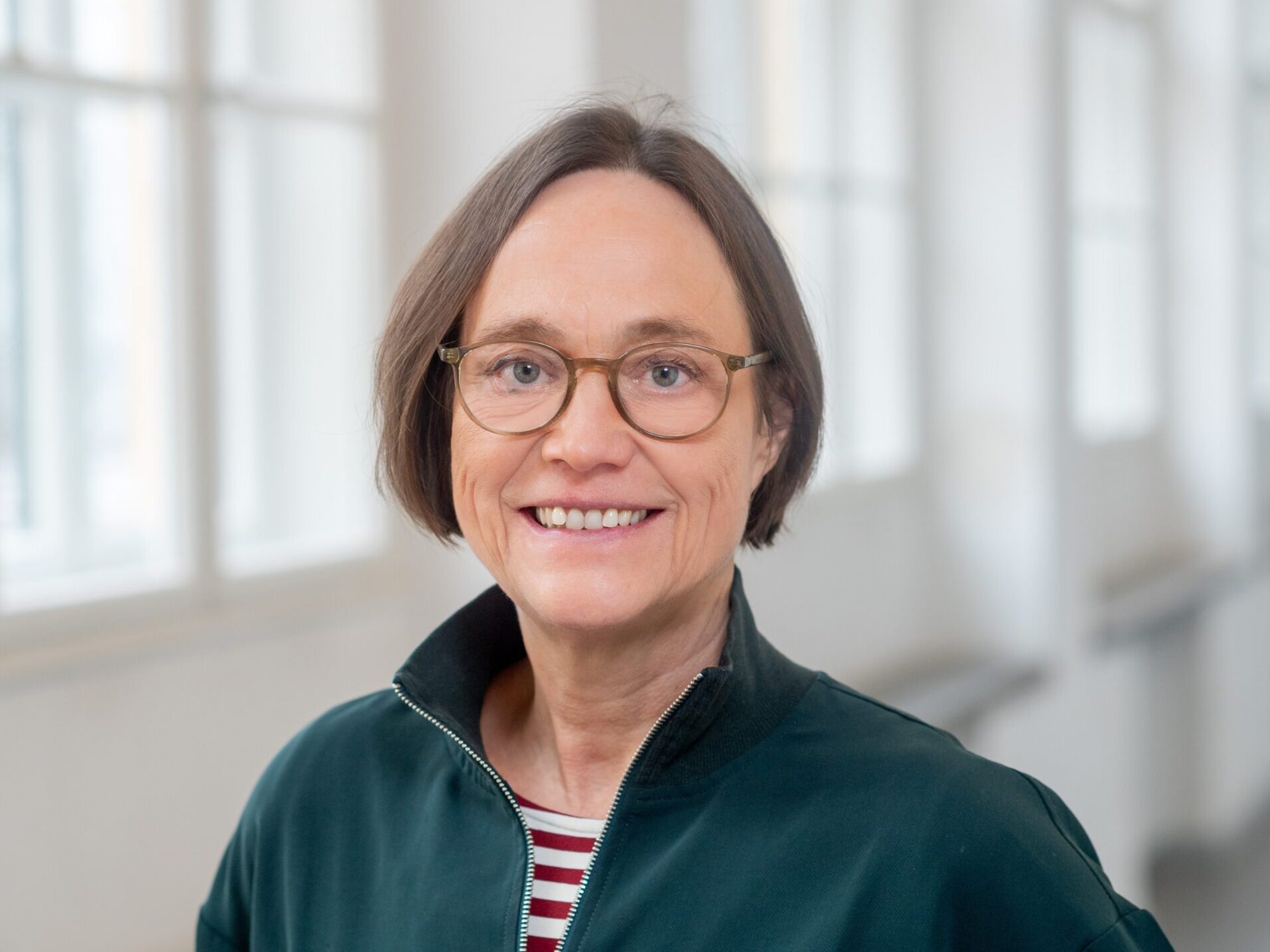
Silke Beck | Technical University of Munich, Germany
Biography
Prof. Silke Beck‘s research focuses on interfaces between science and society. She is a pioneer in analyzing environmental assessments such as the IPCC. Her research also contributes to build up and reform global assessments such as IPBES. Current projects deal with evidence-based policymaking as well as the governance of socio-technical transformations in the field of Negative Emission Technologies, biodiversity and digitalization.
Prof. Silke Beck worked for 20 years in the field of technology assessment and interdisciplinary environmental research. 2020, she was nominated as lead expert for the IPBES assessment of transformative change. Since 2021, she is professor at TU Munich and since 2022, she leads the chair of Sociology of science and technology.
Foto: Andreas Hedderhott / TUM
Talk
What roles and responsibilities for STS in turbulent times – the case of climate change
The talk invites us to explore how, in times of ecological and political turbulence (climate change, biodiversity loss, geopolitical upheaval), STS scholars can make sense of the political constellation and respond to novel challenges not only for politics but also for science. The talk aims to illustrate these challenges using the example of climate change, which is often cited as a prime example of trends in contemporary society (U. Beck). The talk illustrates this, focusing on the Intergovernmental Panel on Climate Change (IPCC). The panel is tasked with summarizing the state of climate research and, in doing so, it mirrors and magnifies challenges facing research worldwide: amid geopolitical upheaval, new evidence that global warming is accelerating, and concerns that attention to climate change is taking a back seat to issues like artificial intelligence and security. Within its seventh assessment cycle (AR7), the panel has responded to these ongoing challenges by convening two co-located workshops entitled Engaging Diverse Knowledge Systems and Methods of Assessment in Feb. 2026 in Reading UK.
How can we make sense of this political moment, challenging what is taken for granted – the constitution of democracy and international order? What can we contribute to understanding the novel geopolitical situation and the rise of political populism, as expressed in resistance to science and mistrust of experts, as well as cuts in public funding for research? Does our situated, relational understanding of science in the making address only the symptoms of the political constellation (such as illiteracy and corporate actors’ misinformation campaigns)? Or how can we address the social, societal, and political changes in which knowledge-making is embedded, which are mirrored and magnified in scientific controversies (such as geopolitical conflicts, loss of political ownership, agency, and honor from the public)? Taking the STS sensitivities for positionality, reflexivity, and responsibilities seriously, what are STS understandings of democracies, and how do they justify our public and political engagements? The talk illustrates how these challenges invite us to rethink the political roles and responsibilities of STS scholarship as well as our conceptual understanding of science in society.
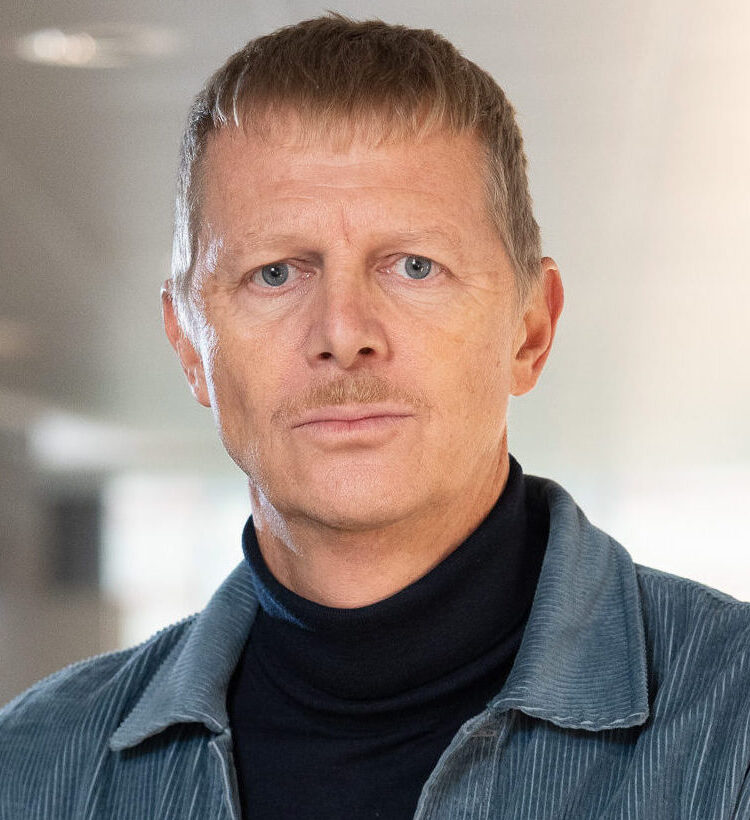
Klaus Lindgaard Høyer | University of Copenhagen, Denmark
Biography
Klaus Lindgaard Høyer is Professor at the Department of Public Health at University of Copenhagen.
Interested in the organization and regulation of the healthcare system and medical research, in particular with respect to introduction of new medical technologies, Klaus worked with research biobanking, stem cells, property issues, forensic biobanking, bone, blood, and organ transplantation, public-private partnerships, ethics regulation, EU health regulation, data-intensification and public perceptions of various of these topics.
Currently he is working on a project funded by the European Research Council (Advanced Grant) called DataSpace. A project about how cross-border health data infrastructures come into being, and how different actors experience living in the data-intensive environments they create.
Klaus is part of the Novo Nordic Foundation project reNEW on stem cell technology: https://renew.ku.dk/.
Talk
The mirage of a world-brain of global data: STS facing Goliath
Health data are intimate. They often relate to moments where people feel most vulnerable. Therefore, the very act of writing down people’s disease history was guarded by strong norms of confidentiality when clinical documentation practices gradually became standardized in the early 20th century. Now, well into the 21st century, these norms are eroded through digitization. Increasingly, health care information is uploaded to digital platforms, broken up into discrete data elements, and exchanged – not just among care providers but with administrators, researchers, and industry, nationally and internationally. New EU regulation makes it mandatory to share data collected digitally in the course of clinical care. Data are now desired for training AI, for innovation, for management, and for international disease monitoring efforts. An old mirage keeps reappearing – the notion of a world-brain of all data, all information, all knowledge available in one place. STS provides pertinent challenges to the mirage – but it has very powerful proponents. What makes the Goliath of data listen?
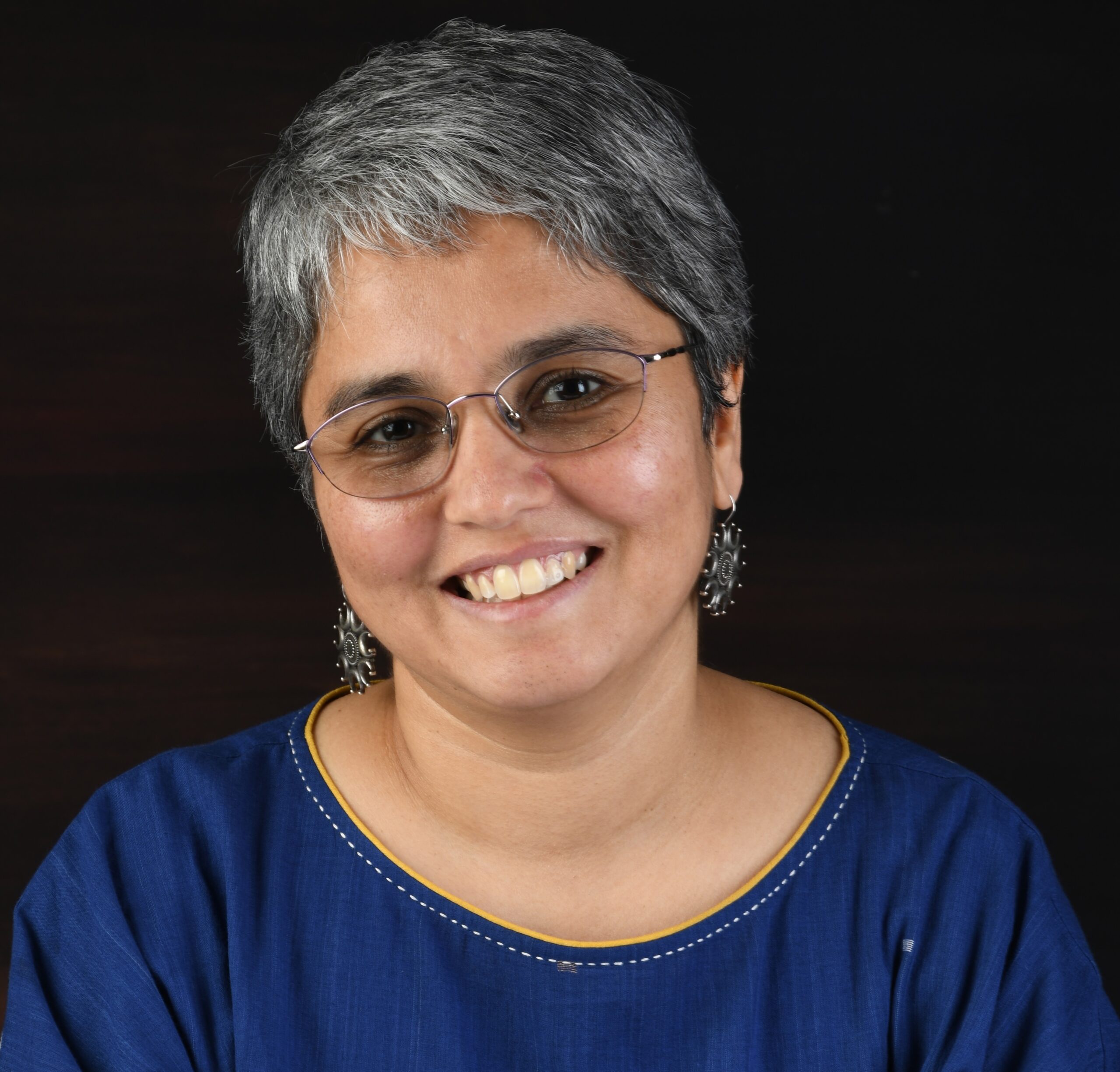
Janaki Srinivasan | University of Oxford, United Kingdom
Biography
Prof. Janaki Srinivasan´s research examines the political economy of information technology-based development initiatives. She uses ethnographic research to examine how gender, caste and class shape the use of such technologies.
Janaki’s work on the politics of informational and digital exclusion is currently focussed on privacy and the algorithmic control of labour. For the past several years, as co-investigator on the Fairwork India team, she has been involved in researching and advocating for change in the precarious working conditions of gig workers in India.
Janaki was previously on the faculty at the International Institute of Information Technology Bangalore and convenor of its Centre for Information Technology and Public Policy. She has a PhD in Information Management and Systems from UC Berkeley and Masters degrees in Physics and in Information Technology from IIT Delhi and IIIT Bangalore.
Besides the OII, Janaki is also associated with Oxford School of Global and Area Studies and St Antony’s College.
Talk
Foregrounding Continuities in the Age of “Disruptive” Technologies
The times we live in (variously described as the Age of Information, Data or AI) have often been called “disruptive.” Moreover, disruption is largely seen as positive in this framing. But even where it is perceived as negative, what is seldom in question is the characterisation of contemporary times solely through its discontinuities with what came before. What are the implications of focussing on discontinuities and looking away from continuities? In this talk, I will highlight the social costs of eliding continuities, specifically the histories of collective action on which our technological present is built. Towards this, I will draw on my research on the politics of digital exclusion in India over the last two decades.
My talk will centre two categories of digital interventions – price information systems and platform work. Based on my research on the role of mobile phones in the circulation of price information among fishers in Kerala, and on labour conditions on gig work platforms in India, I examine the consequences of framing these as instances of technological novelty first and foremost. In the case of the fishers, I argue that a focus on mobile phones took attention away from the decades of fishers’ collective action that had fundamentally shaped the constraints and possibilities of the social worlds within which mobile phones and price information now circulated. A somewhat different instance of highlighting disruption comes from location-based gig work platforms (ride hailing, food and grocery delivery, and home services platforms among others) and draws on my work with Fairwork India. Globally, such platforms have offered the newness of their technology and business models as reasons to delay regulatory oversight over them. I show how this framing additionally presents a barrier to learning from earlier eras of labour organisation in the country. I point to a counter-example, where Indian gig worker collectives drew on the experience of informal workers’ organisations from the 1960s to build provisions for regulating gig work.
Speaking to core STS interests in socio-technical imaginaries and the politics of how technology is framed, this talk will ask: what possibilities open up when we decentre disruption and centre continuities in the social and political lives of technologies? In so doing, I point to the crucial role that alternative imaginaries from our past could play in reimagining our collective futures.